

The Separation of Church and State – Differences in the US and the UK.
A few years ago on a work trip, my curiosity got the better of me and I found myself in a large, established church in Ohio, where the American flag hung as proudly as the cross (NB, I’m British and hadn’t been to a US Evangelical church before). The sermon wasn’t only about salvation; I could feel within my bones that this was about the very soul of America. The preacher bellowed about how the country had turned its back on God and how sinful America had become.
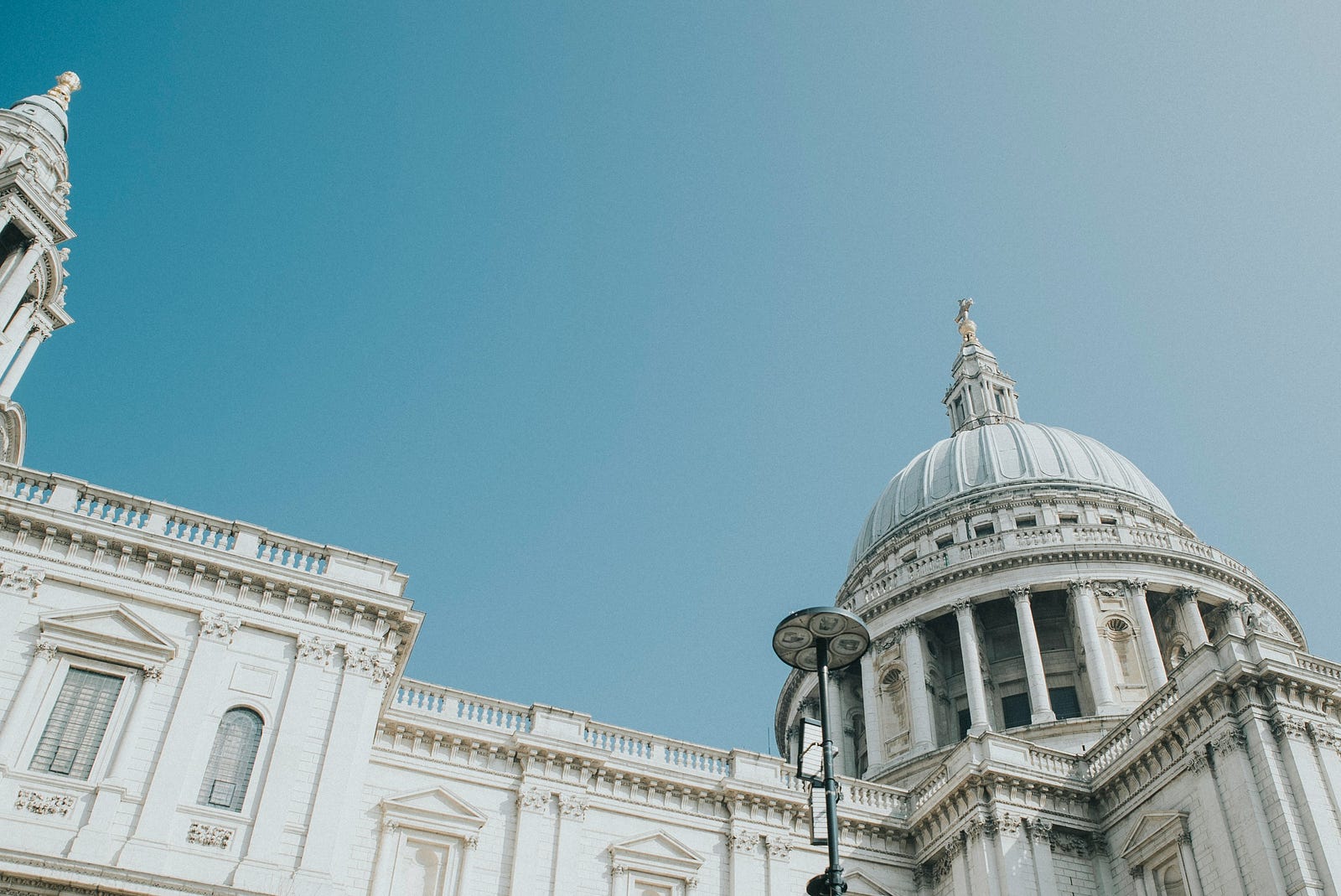
Not long after, I attended a service in the UK, in an ancient Anglican cathedral. The vicar spoke in calm and peaceful tones about the need to accept change, to listen, to adapt. There was no fiery rhetoric about our nation’s dramatic downfall into sin, no bigging up our national identity, no talk of political enemies as seen among some prominent US Evangelical pastors. And yet, this was the established church of England, the same institution that recently crowned King Charles III ostentatiously with divine blessing.
What a contrast!
The disparity between these two moments reflects something much deeper than simple differences in worship styles. Here we see two wildly distinct relationships between religion and politics and two wildly distinct interpretations of what ‘separation of church and state’ actually means. And in a world where US and UK politics influence each other more than ever, through culture, policy, and the shared challenge of rising nationalism, we must understand these differences. We must learn to understand that, in this regard, we are talking a different language.
Foundations: A Divorce vs. A Marriage of Convenience
The phrase “separation of church and state” rings like gospel in American discourse. Ingrained in the American consciousness, it’s often attributed to the First Amendment, but the actual phrase comes from Thomas Jefferson, who described a “wall of separation” between religion and government. The US was founded in part as a rejection of state-imposed religion. Many of the first settlers fled religious persecution in Europe, and by the time the Constitution was written, the memory of state churches — where heretics were imprisoned or exiled — was fresh.
Here in the UK, we never really had such a divorce. The Church of England is the mortar that holds the bricks of the state together, its bishops sitting in the House of Lords, King Charles III serving as Supreme Governor of the Church. British law still maintains arcane religious relics, such as the fact that Anglican bishops can still influence and vote on certain laws in parliament.
And yet, in practice, Britain is far more secular than America. Church attendance has plummeted. Religion rarely enters the cutthroat world of political debate. While the Prime Minister might be photographed attending Christmas services, overt appeals to faith in elections are rare. Compare that to the US, where presidential candidates practically race to outdo each other in declaring their faith.
So, what happens when you have a country with a legally entangled church but a largely secular public, versus a country with constitutional separation but a highly religious electorate?
Why Does It Matter?
This isn’t just some academic theory stuff, it has real life consequences. Consider the recent Supreme Court decisions in the US, which have leaned toward allowing more religious influence in public life. From prayers at football games to funding for religious schools, the boundaries between church and state are being redefined. American conservatives have embraced the idea that the separation of church and state is a myth, that the founding fathers never meant to exile Christianity from public life but to protect it.
In the UK, however, debates over religion in politics are far less intense. There was no huge outcry when the country legalised same-sex marriage, no mass mobilisation of religious voters against abortion laws. Yet the Church of England still holds institutional power, an irony that American evangelicals might envy.
Where this transatlantic tension becomes dangerous is in the spread of culture war politics. American religious movements, especially Christian nationalism, are exporting their strategies, and in the UK it’s catching on. British politicians, particularly on the right, are starting to borrow the language of “Christian heritage” and moral decline. Suella Braverman in 2023 told us that immigration was threatening the ‘national character’. The populist playbook that has worked in the US, such as painting political opponents as enemies of faith, is creeping into UK discourse. Religious related ‘family values’ dog whistles are increasingly used to stir public emotion. Nigel Farage has recently called for Britons to have more children to ‘save Judeo-Christian values’.
The Question of Power
Ultimately, the separation of church and state isn’t just about religion. It’s about power. Who decides what is moral? Who has the right to impose their vision of a good society? Certain actions that you might not give a second thought to, can suddenly become illegal. Given the mass surveillance in operation, how comfortable are we with new religious, moral laws turning ordinary people into criminals?
In the US, this is a battle fought with increasing ferocity, where faith is a political weapon wielded in the courts, at school board meetings, and on the campaign trail. In the UK, faith is more like an old relic. It’s still part of the national furniture, but gathering dust in the corner.
But history tells us that dust can be shaken off. The question is whether Britain, watching the religious right’s success in America, will choose to follow suit or whether the US will look across the Atlantic and see a different way forward.
The stakes are higher than ever. Understanding these differences isn’t just about history, it’s about the future. In both countries, just as in more theocratic parts of the world, religion is never truly separate from the state. It’s just a question of how loudly it speaks.
Written by Jo Greenwood
Ex FS management consultant in the midst of a career change to a teacher of Philosophy & RE. Searching for meaning in philosophy, politics, art, and literature. Contact me here or leave a comment.