

What a 2,000-Year-Old Story Reveals About Our Cancel Culture
Everywhere we look, we read tales of divisiveness, cancel culture and moral outrage.
Perhaps a look at an ancient story about a father with two difficult sons might be the radical text we need most.
The Parable of the Prodigal Son, found in Luke 15:11–32, is one of Jesus’ most well-known and most beloved teachings. It’s one of the first I recall ever being taught at elementary school.
On the face of it, it appears to be a classic tale of sin and redemption. The man’s younger son rebels, repents, and is then forgiven. All good (unless you are the other brother).
But, like much poetry and literature, the edges begin to blur if you sit with it for a little while.
On sitting with it, you might wonder, is this just a simple tale of sin and grace? Or is it also a meditation on pride, alienation, longing, or even religious hypocrisy?
The answer, it would seem, is yes, yes, yes, yes and….yes again.
This parable has inspired theologians, pastors, poets, artists, and psychologists for centuries. Looking through their different lenses reveals perspectives that were not apparent to me in the first reading. Each one demonstrating that several interpretations and truths can coexist simultaneously.
1. The Traditional Interpretation: Sin, Repentance, and Forgiveness
In the classical Christian reading, the younger son’s inappropriate and premature request for his inheritance is tantamount to wishing his father dead.
He takes the cash, disappears like a thief in the night, and squanders it on a prodigal (reckless, extravagant) lifestyle that one might associate with tabloid fodder Hollywood wannabes.
When hard times hit, he’s reduced to feeding the pigs, an uncomfortable and humiliating image for Jesus’ audience.
Eventually, tired of the pigs and tinged with guilt, he arrives at his senses and heads home.
He expects punishment or, at best, a servant’s position in his father’s home, but instead, the father runs to greet him. He hugs him, clothes him in his finest robes, and throws a fine feast to celebrate his return.
This interpretation sees the father as representing God and the younger son playing the role of the sinner.
The message is crystal clear: no matter how far you fall, you can always come home. No matter your sin, you will be forgiven.
There are many examples of people who have deconstructed their faith, and stepped away from religious traditions only to return later with a more personal, hard-won spirituality. Or public figures who fall from grace and later seek (sometimes public) redemption.
I don’t know about you, but I wondered whether Russell Brand, following the string of allegations and some very public spiritual posturing, was genuinely sorry. It’s hard to take him seriously when he’s baptizing people in his underpants. Does he deserve forgiveness?
This interpretation of the parable frames the question differently. Can we celebrate their return, even when it feels unfair?
2. Blomberg’s Interpretation: Holding up a mirror
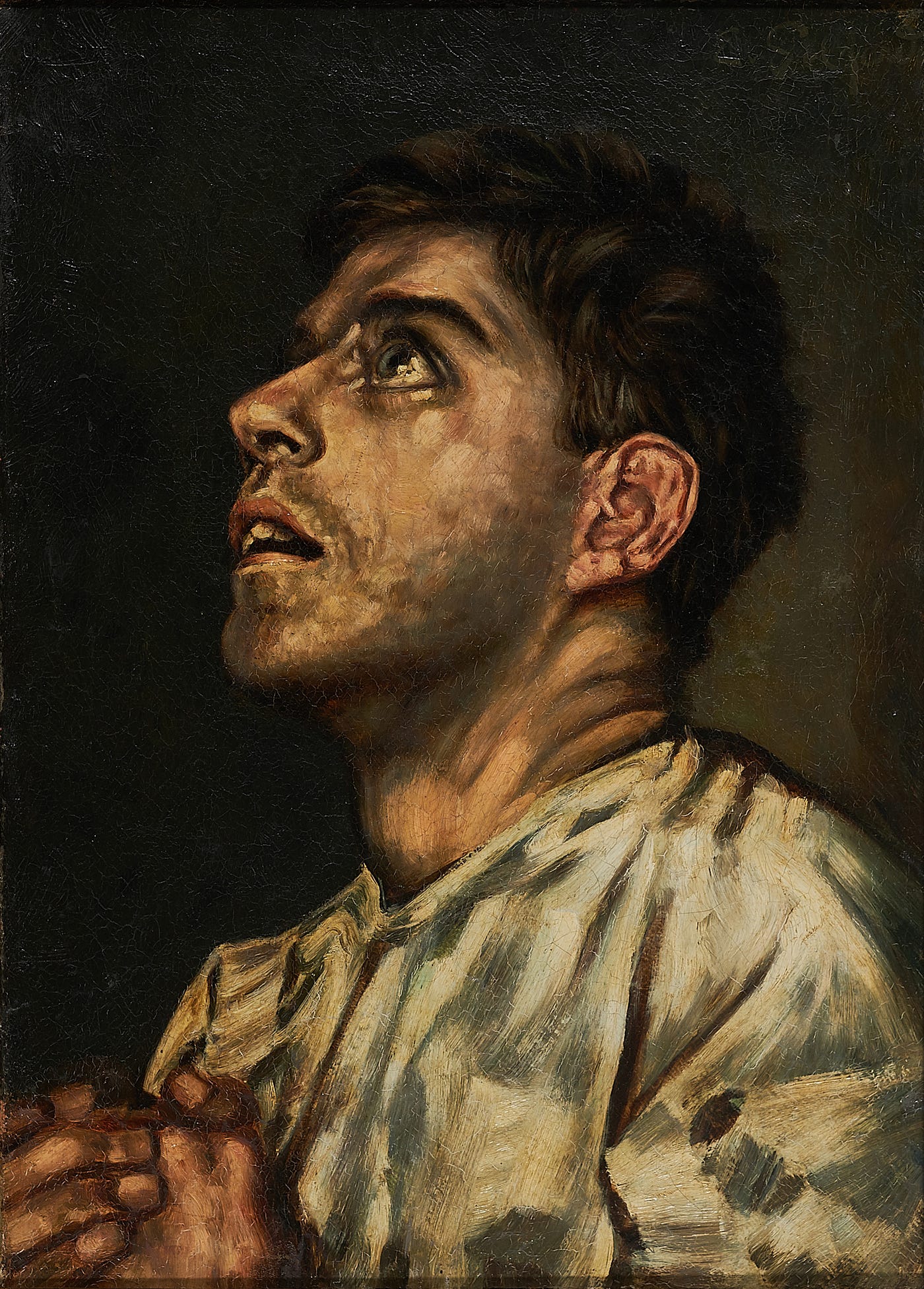
Sometimes, interpretations as us to be more introspective. For example, Craig L Blomberg, American theologian and New Testament scholar has defined a unique framework for interpreting parables, suggesting that several stories follow a three-character model. We can all identify with each character, at some point in our lives.
- The Younger Son: His journey of repentance and his fall from grace are dramatic and disgraceful, but his return is grounded in humility and a surprising hope that he might still belong and gain acceptance
- The Father: A vision of radical, unquestioning forgiveness, his love is unconditional. He runs to his son, and celebrates, not after restitution, but upon seeing him return.
- The Older Brother: He oozes resentful righteousness. He remains loyal and obedient to his father, but his heart is ice. He cannot rejoice in grace that seems unjust.
Blomberg’s approach helps us to think differently about the parable beyond a simple, traditional Sunday School teaching.
It brings to mind how we respond in matters of criminal justice. Some advocate for rehabilitation and second chances (like the father), while others insist that those who break the rules should face lasting consequences (like the older brother). Returning citizens, people who have served prison sentences, or lived lives that many Christians would typically characterised as ‘sinful’ often encounter this tension head-on.
Some communities welcome them with open arms, and others simply cannot move on, and refuse to forget their past.
So back to Brand. Not a criminal but he’s admitted to a heavily chequered past. A lot of people don’t forgive him because, frankly, they don’t believe him. They don’t buy the repentance, the baptisms, the spiritual language, the man-bun-beardy self-help guru persona. It smells like bullshit.
Maybe they’re right. Maybe he isn’t sincere.
But that’s exactly why this parable is so difficult. The father doesn’t wait for proof of sincerity. He doesn’t grill his son about motives or timing. He doesn’t make him earn his place back. He just sees him, from a long way off, and runs.
Yet, the older brother? He’s the one who says what we’re all thinking:
You’re really just going to forgive him? Just like that?
We have no idea whether the prodigal’s apology was heartfelt or rehearsed and maybe that’s the point. Grace, in this story, isn’t given because someone deserves it, or worked hard for it. It’s given because they came home.
As Blomberg points out, the older brother’s righteousness is real, but so too is his resentment. His goodness becomes a barrier to grace
The question becomes, do we believe in restoration or only retribution? Are there a set of conditions?
3. The Lostness of the Older Brother: Spiritual Elitism and Gatekeeping
YouTube is great for finding modern interpretations, like those from The BibleProject and Rethink — Simple Bible Teachings. Like Blomberg, both teach us that the parable isn’t about one prodigal son but two lost sons.
The younger son’s rebellion is obvious. But the older son is also alienated, by his pride, his sense of entitlement, his belief that he deserves more than his sinful sibling. His refusal to enter the feast reveals a heart far from the father, even though he never left home.
Jesus told this story to a crowd that included religious leaders who scoffed at his ministry to tax collectors and sinners. In this interpretation, the older brother represents the Pharisees, those who are characterised as doing everything “right” but can’t bear the thought of God welcoming the wrong kind of people.
Do we celebrate the sinner’s return, or do we peer out of the window, twitching the curtains with our arms crossed, tapping our feet and frowning disapprovingly?
It’s hard looking inwards sometimes.
4. Rilke and Goldberg: Alienation, Identity, and the Right to Return
It’s not just the theologians. Poets and artists have also reimagined the story in more existential ways.
In Der Auszug des Verlorenen Sohnes, Rainer Maria Rilke focuses not on the return but on the departure. For the younger son, the act of leaving is not an example of moral failure, but one of human yearning. His restless soul is seeking itself. The son is not seen as a sinner, he is a seeker, someone who steps into the unknown because he cannot stay where he is.
Sometimes people leave family or faith, not because they hate them, but because they are trying to survive. Think of LGBTQ+ individuals who step away from religious or cultural traditions for the sake of mental health. Or anyone that has felt oppressed by their immediate surroundings. Their departure is often framed as rebellion, but it may be an existential search for life.
Leah Goldberg, in her poem The Prodigal Son, stays closer to the gospel story than Rilke, but adds a new perspective. Her returning son does not offer a polished confession. He is complicated, self-aware, and still flawed. The family members, such as the mother, sister, and bride, respond in varied ways. Perhaps a truer reflection of the complexity of forgiveness and healing.
Her version of the story reminds us that coming home is never simple, not for those returning and not for those waiting. Families break and rebuild unevenly, and not everyone cheers and celebrates the return. But sometimes, coming back anyway is the bravest act of all.
One Story, Many Truths: What This Tells Us About Reading
So which interpretation is the “right” one?
That question misses the point.
The Prodigal Son doesn’t give us a clean, single truth. It holds many truths at once. There are many lessons that can be learned on quiet reflection. Yes, the parable teaches us about grace, but also about how we read and interpret situations. It teaches us that stories that don’t always explain themselves upfront, and with a bit of work we can expand our ways of thinking.
Jesus didn’t tie up the ending. He left the older brother standing outside. The story ends unresolved, just like normal life, just like grace, just like family. Some truths are not meant to be pinned down, they are meant to be pondered over. We are meant to consider different perspectives respectfully.
The question that challenges me the most is, can I rejoice in someone’s return, even when it challenges my sense of fairness?
Maybe in the not-too-distant future, someone you know will be asking for forgiveness. Maybe it will be you.